Growing up around gambling harm shapes far more than a person’s relationship with money.
Nelson’s story
It shapes their sense of safety, belonging, and home. In this story, Nelson reflects on what it meant to be a child living in a home with gambling harm, and how reclaiming his voice with art helped him make sense of an experience that was invisible to everyone else.
Have you ever met a child impacted by gambling harm?
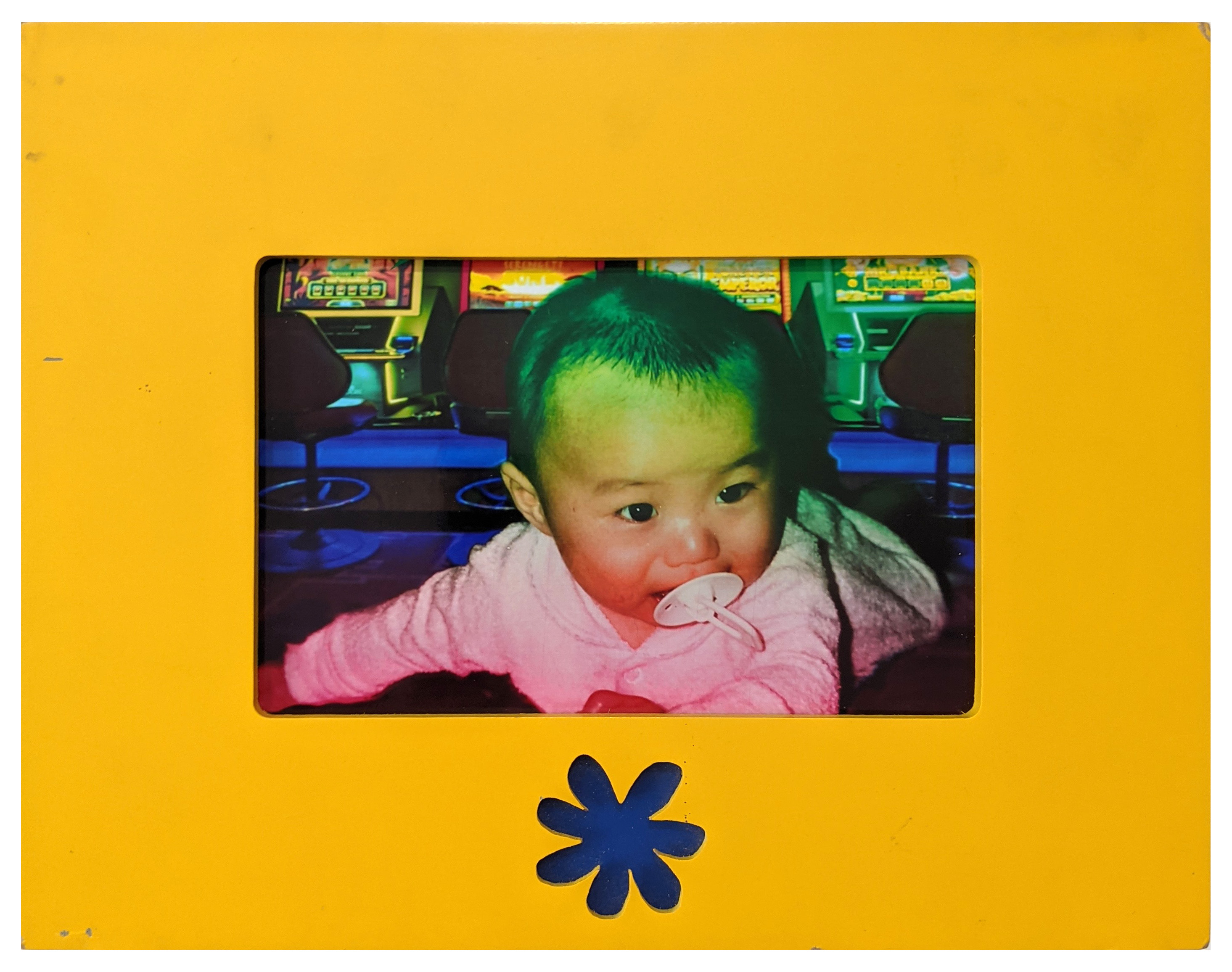
Home Is Where the Harm Is (2024-2025)
You are looking at one right now.
I was born into a world of gambling harm. I am the child of someone impacted by gambling harm, the nephew of someone impacted by gambling harm, and the friend of someone impacted by gambling harm. I have lived in this world for as long as I have known yet no one else knew about this. It was invisible to everyone around me and, for a long time, invisible to myself.
What does gambling harm look like for a child? Gambling harm takes the form of strangers that knocked on my door at midnight demanding money. I have never met these strangers before and somehow, they knew where I lived. I silently watched my spare coin jar slowly and secretly shrink day by day. I spent most of my childhood and adolescence being disassociated from the people and environments around me.
My home environment was one that normalised and repeatedly displayed conflict, hurt, deception and mistrust between each family member. I was not fully present, nor were the ones around me, as each of us struggled with their own lives. Growing up with gambling harm felt like growing up in a house built on sand, where the only way was down as everyone slowly got swallowed by the lack of support under us.
You can learn more about how gambling harm affects families and the people around them by reading about the impacts on family members and friends.
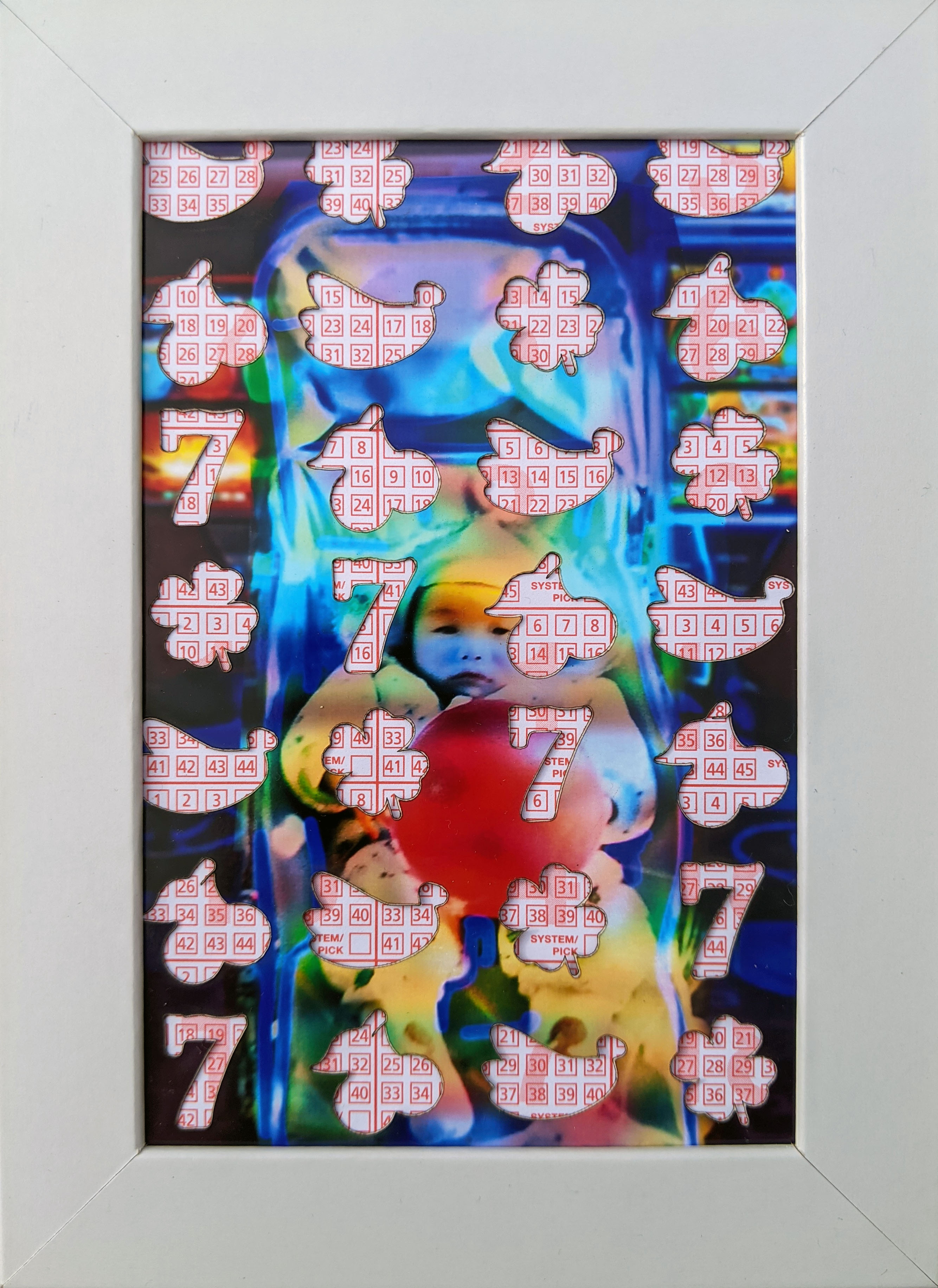
Home Is Where the Harm Is (2024-2025)
This house built on sand was in Western Sydney. This is where my refugee and migrant parents had settled in when they arrived in Australia. They had fled Cambodia during the Khmer Rouge and Vietnam following the Vietnam War. Both were descendants of my Chinese ancestors who had been in search of a new home during the Great Chinese Famine. Importantly, all of these countries and cultures that my family came from have always outlawed gambling.
Australia, on the other hand, was the first country to deregulate gambling and New South Wales was the first state in Australia to legalise poker machines in 1956. It must be no coincidence then that our life of gambling harm all began the moment my family set foot in Australia, onto the land that has three quarters of the world’s “pub and club” poker machines.
On top of this, when they arrived in Western Sydney there was little else around except for the pubs and clubs full of poker machines. With this, they began to build their lives in a new neighbourhood, and one that is still the most saturated area with poker machines in all of Australia.
To explore how gambling problems can begin, you can read about the pathways into gambling harm. Or, you can learn more about what gambling is and how it works by visiting our page on understanding gambling.
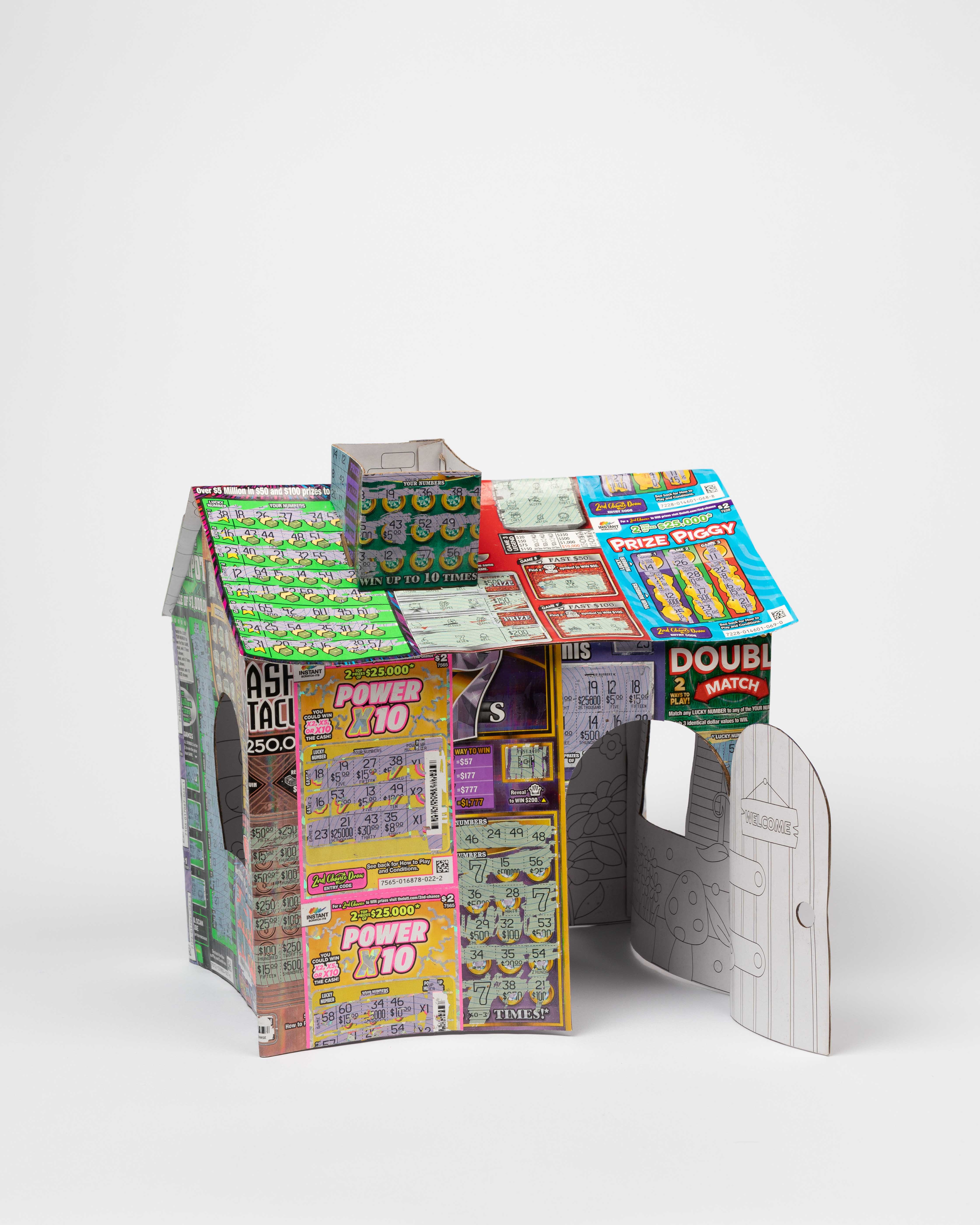
Welcome Home (2025)
Now fast forward to the COVID-19 pandemic, and for the first time in history, all gambling venues were forced to close. As a result of this, everyone in the family saw the light. A very different light. I saw the person behind the parent who gambled. We connected. I could humanise them. I also discovered art during this period as a way to cope through being in lockdown. Through art, I saw that I could humanise myself.
Art allowed me to own my story. I was able to transform my hidden source of sadness and shame into a story of truth and empowerment. I got my agency back. This began the process of externalising and redirecting all my internalised shame. Up until that moment, I had always only blamed the ones around me for the gambling harm we experienced, and I now came to realise and understand that parents do not choose to hurt their children. Which made me question who was hurting the parents to make them pass the hurt to their children?
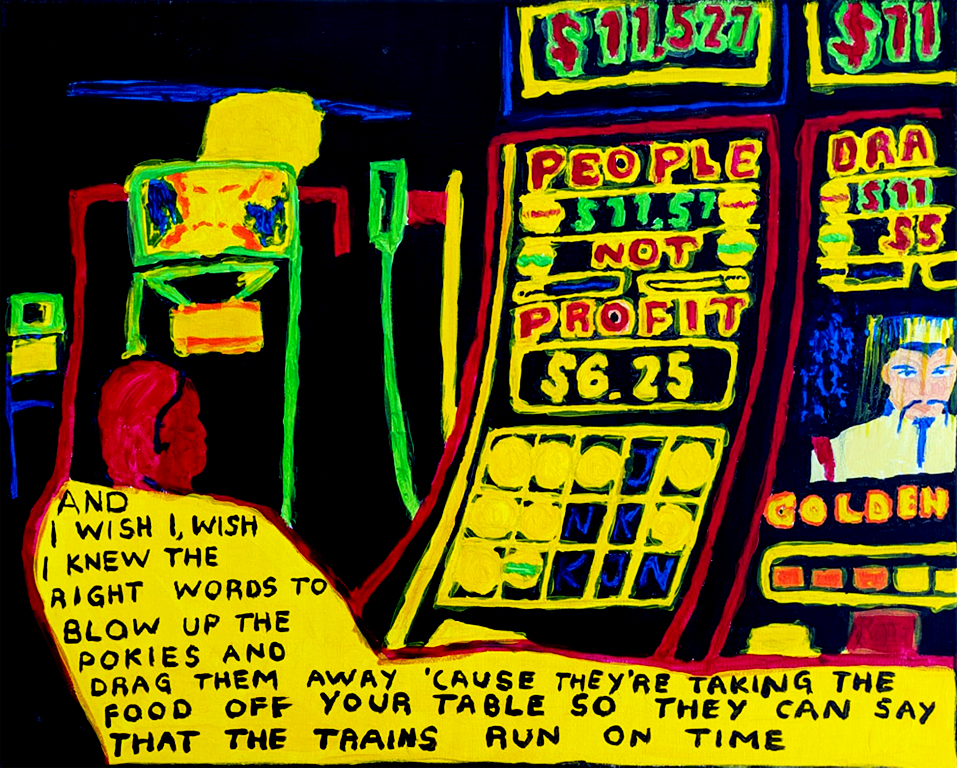
Trains Run On Time (2025)
The process of denormalising the gambling culture that I grew up in began. I never thought twice about questioning this gambling culture until now. Why was I placing the blame solely on ourselves as individuals when my community stood no chance against gambling harm. Western Sydney accounts for one third of Sydney’s poker machine losses, yet we are only 16% of the population. New South Wales is home to half of all poker machines in Australia.
Of equal concern, one local government area around me has one poker machine for every 55 people while in other parts of Sydney, there are almost none. It seems that we were deliberately the ‘hotspot of harm’, to the extent where Australia has earned the title of being the biggest loser to gambling per capita in the world. This even gets us a mention in the Guinness World Records, and I would say that much of this comes from the losses taken from Western Sydney communities. What an achievement.
To understand the factors that contribute to gambling harm in communities, you can read about the gambling‑specific risks that play a role.
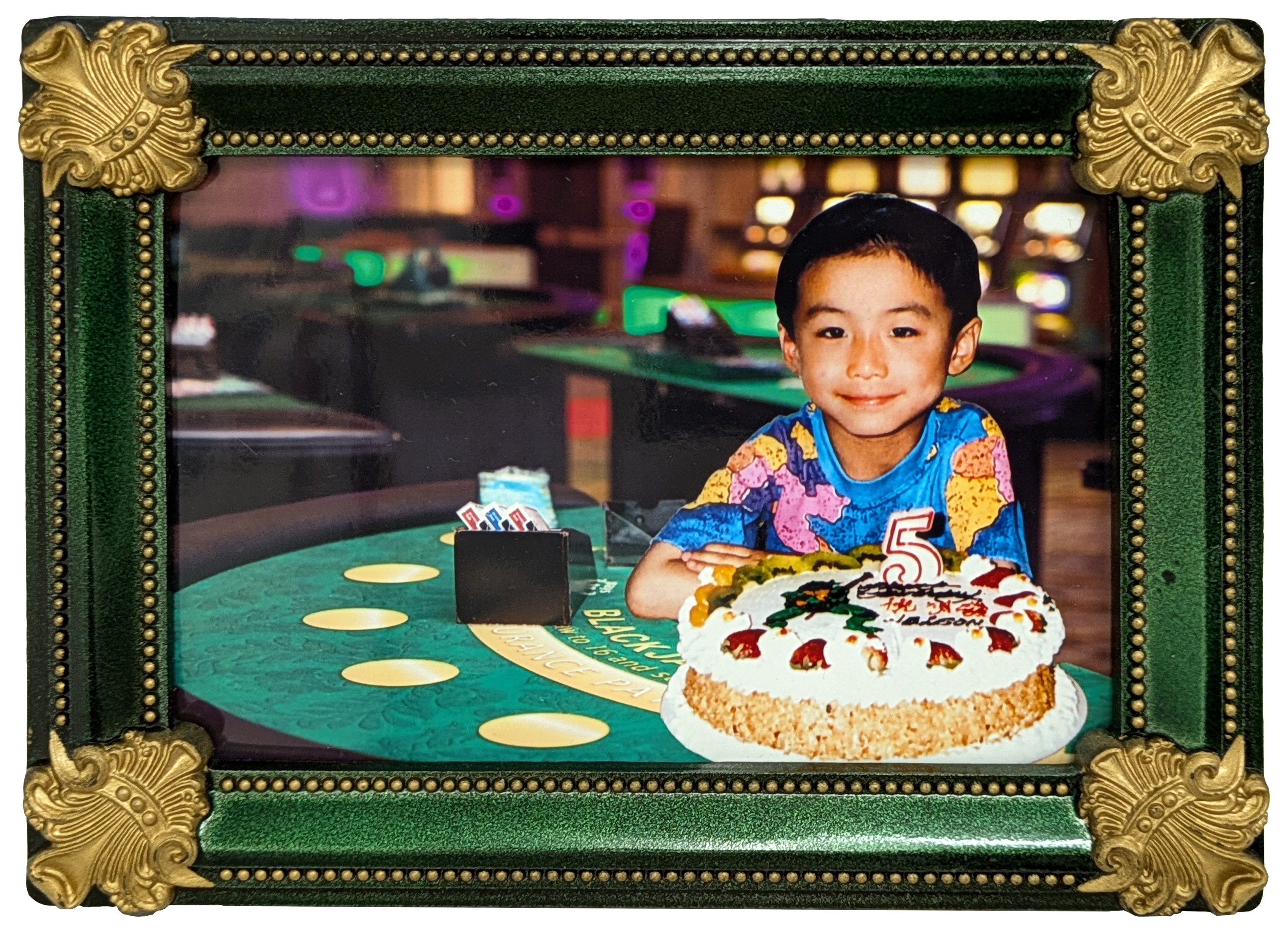
Home Is Where the Harm Is (2024-2025)
At the same time, I realise I have now become an ‘accidental artvocate’. I didn’t choose this role and instead, it seems to have chosen me. I try to represent the experience of growing up in the house built on sand through my art and advocacy work so that children and families can finally get acknowledgement within conversations about gambling harm.
I revisited my childhood photographs in my series of works Home Is Where The Harm Is as I wanted to paint the picture of a child impacted by gambling harm. There is a photo of me on Santa’s lap. However, I don’t remember being on Santa’s lap. What I remember instead is the constant presence that gambling harm had in all our lives at home, and so Santa’s silhouette is made up of gambling.
In a way, I have become the “literal” poster child for affected others and children impacted by gambling harm. I had over 160 photo frames in this series which I exhibited in Firstdraft, Sydney to much of the audience’s surprise and shock as many were not aware of the public health crisis we have upon us. The process of individually sourcing these found objects was a way for me to honour the lived experiences of others. These are my memories on behalf of others who share this space with me as I continue to make the invisible visible.
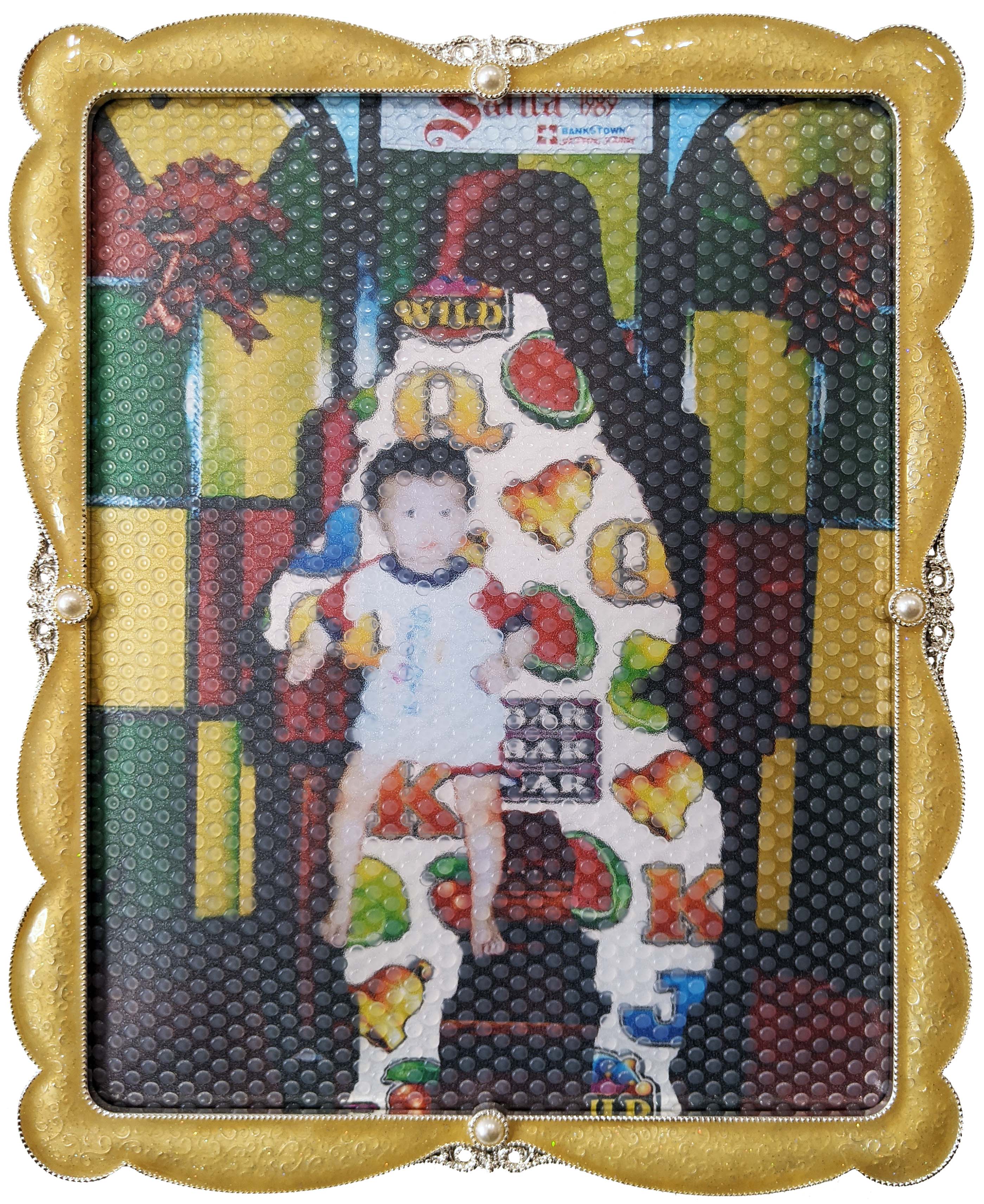
Home Is Where the Harm Is (2024-2025)
I have also realised that I’m not the only child who has been impacted by gambling harm in Australia. For every person experiencing gambling harm, seven or more people are impacted. Every person impacted by gambling harm belongs to someone, to their child. There must be so many children in our country who know this harm all too well, and many have bravely reached out to me since with mutual understanding and unspoken connection. I now feel a sense of responsibility to honour all these children who have been impacted by giving them a voice.
I am thankful that I could accept and forgive the gambling harm that I experienced. Yet I know that there are many children out there who are yet to find this place inside them because of the shame and stigma that the industry has weaponised against us. This has been done through creating myths such as “problem gambling” and “problem gambler” which have effectively dehumanised everyone impacted by gambling harm.
I want everyone to know that we are all people. I want all these fellow children, who have been impacted like me, to know that I see and hear them, for I have walked in their footsteps. I also want them to know that I am no longer ashamed of my experiences of gambling harm. It has turned into a gift as this is the truth that I speak out loud, the shame has been passed back to the other parties who deliberately misplaced this on us. It is now our collective shame as a nation of people, where we are willing to put profit ahead of our own people at any cost.
You can read more about how gambling harm affects children and young people on our page about supporting young people in gambling‑impacted families.
Each and every one of us is part of this public health crisis and this also means that we are part of the solution. We can challenge our own biases towards people impacted by gambling harm so that we stop the shame and stigma and begin humanising these people. We can also denormalise and call out the gamification practices of the gambling industry as gambling is not “gaming” nor is it “harmless entertainment”.
Gambling costs real lives. I want you to imagine if this life was your parent’s, your child’s or your friend’s. Ultimately, we can demand that our government implement long overdue gambling reforms which prevent and reduce gambling harm – so that no more children are harmed and they don’t need to be the ones sounding the alarm.
Reach out
If you’ve been impacted by someone else’s gambling, it’s important to know that you’re not alone. Support is available whenever you’re ready to explore what you’ve been feeling and what might help you move forward. You can chat to us online or call 1800 858 858 , it’s free, confidential and available 24/7.

